Is Deadside Hacking Worth It Complete Guide
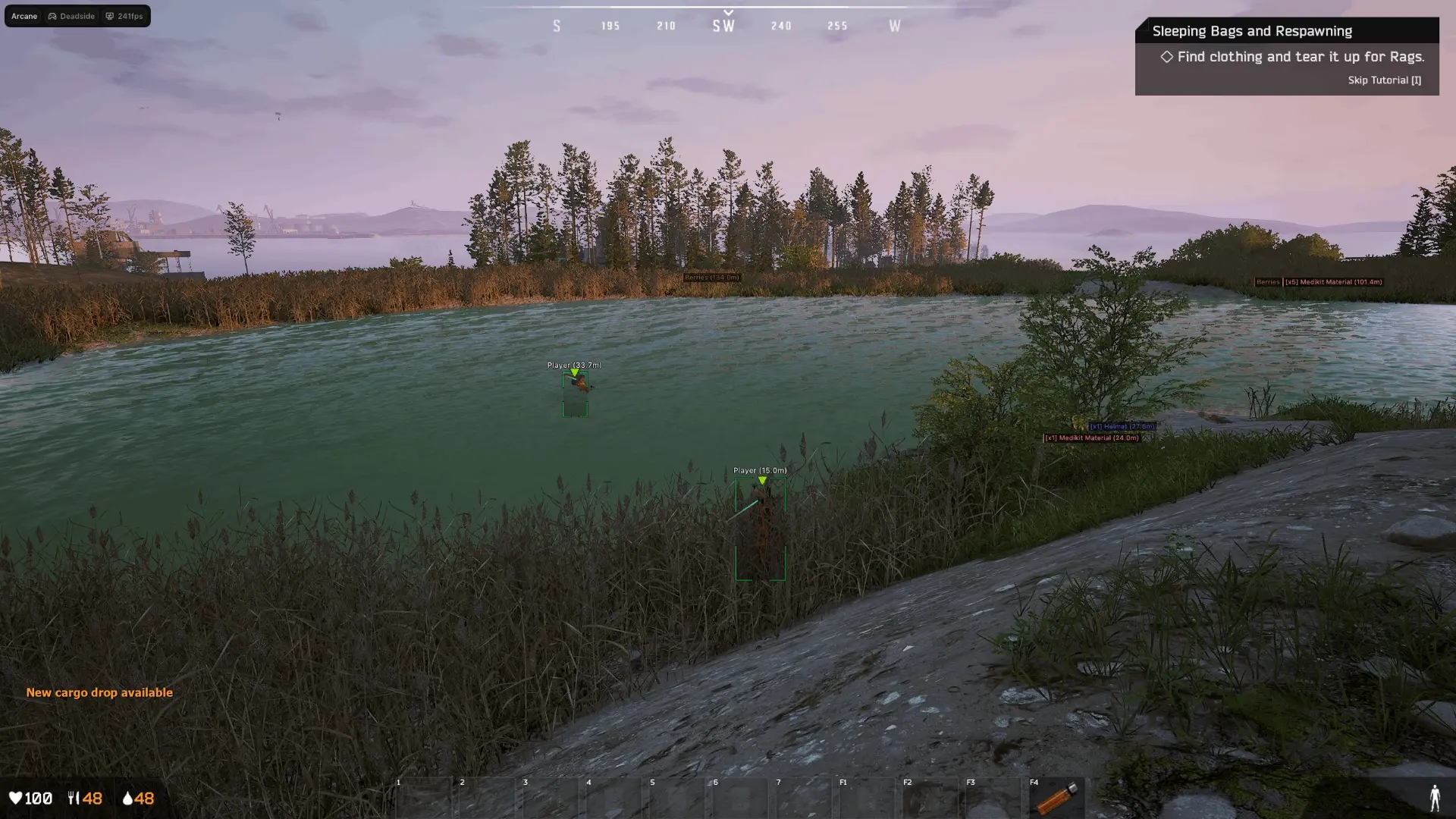
Item ESP with distance filters draws enemy squads through geometry with a distance readout, so you know whether a contact is a threat now or in ten seconds. In heli crash looting that difference decides whether you hold or reposition.
A realistic turnaround is hours rather than minutes, and occasionally longer when EAC itself changes instead of just the game.
Holding an angle in a player-built stash base
The overlay needs borderless or windowed mode to composite correctly. Exclusive fullscreen is the second most common reason someone sees nothing at all.
Visibility checks stop it pulling toward something behind cover, which is both useless and exactly the behaviour that gets a clip posted.
Ask when the last patch went out and how long the gap was. A provider who cannot answer that quickly is telling you something.
Compare like for like: the same licence length, the same module list, the same update commitment.
What gets people banned, in order
The realistic change is consistency. Good sessions look much the same as before; bad sessions get noticeably less bad.
EAC runs at kernel level and watches for injected modules, patched functions and known signatures. A tool that stays external and never writes to the game avoids most of that surface by construction.
Filters exist because not every category is worth drawing. Hide what you never act on, keep Convoy Cases and enemy squads, and it starts feeling like information rather than decoration.
Per-loadout profiles are worth the setup time, because the curve that feels right up close is wrong at distance. Save two, bind a key, and stop compromising between them.
Tuning it so it does not look obvious
Frame cost scales with what you draw. Cap ranges, disable categories you never act on, and the overlay costs almost nothing.
Smoothing matters more than field of view. A wide FOV with slow, humanised movement reads as good tracking; a narrow FOV that snaps reads as a cheat to anyone watching the replay.
Deadside cheats are external PC tools that surface information the client already holds, and optionally assist your aim. They do not make you good; they remove the guesswork.
Buyers almost always want the same three answers: what it shows, how obvious it is, and what happens when the game patches.
The sliders worth touching first
Detection is rarely instant. Bad Trip Games tends to gather evidence and act in waves, which is why "it worked yesterday" is not evidence of anything at all.
Check the status page on patch mornings. Queuing into Deadside on an unverified build is the single most avoidable way to lose an account.
Support quality is invisible until patch day, at which point it is the only thing that matters.
Write down what works
Range limits separate a usable overlay from noise. Cap it at the distance your weapons actually matter at and the screen stops fighting you for attention.
Be suspicious of anything advertised as permanently undetected. The honest framing is maintenance, not immunity.
Reading patch notes for what affects overlays
Aim smoothing covers the cases the aimbot does not, so in practice the two get configured together rather than treated as alternatives.
The mistake most people make is turning everything on. Every category you enable competes for attention mid-fight, and a trimmed overlay is read far faster than a full one.
Colour, thickness and fill are configurable per category, which matters on bright maps where a default palette washes out completely. Two minutes on contrast pays for itself.
This is not a shortcut past learning the game. Positioning, timing and target selection still decide fights; the toolkit stops you playing blind.
A convoy raid in the open is where the information advantage compounds, because everyone else in the lobby is still guessing.
Short licence first: the honest recommendation
Update your GPU driver before blaming the tool. Out-of-date drivers cause more overlay glitches than every other cause combined.
In a contested airdrop the value is mostly pre-fight. Knowing where a contact is before the engagement starts is worth more than anything the overlay does once shooting begins.
Colour and contrast on bright maps
Everything runs on Windows 10 and 11, configured from an in-game menu with bindable hotkeys for every toggle.
Visibility checks are worth leaving on. Drawing a target you cannot actually shoot teaches bad habits and gets you pushing into walls.
Account age, hours played and purchase history all affect how much scrutiny a profile attracts. A fresh account running maxed settings is the worst possible combination.
Saving and swapping profiles mid-session
Keep the order reference somewhere you can find it. It is the fastest route through support if activation fails.
Pairing it with item ESP with distance filters gives you both the position and the state of a contact, which is usually what you need to decide whether a push is on.
Filtering down to what you actually act on
The short licence exists so you can find out whether the feature set suits how you actually play before committing to anything longer.
Save/load configs gives you the shape of a rotation early enough to act on, which matters more in a player-built stash base than raw aim ever will.
Every tier ships the same modules; length is the only difference. Nothing is held back to upsell you later.